

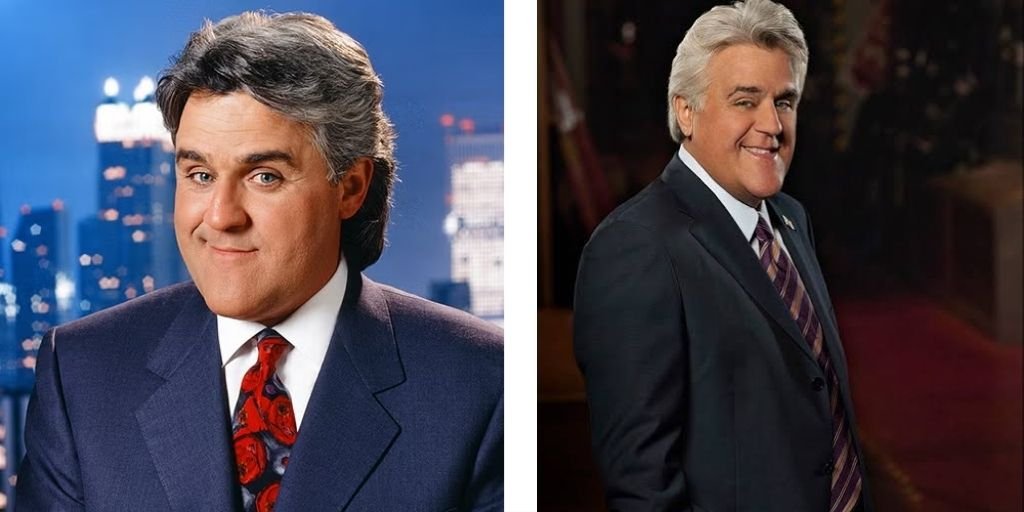
Jay Leno is one of those entertainers whose face and voice became familiar to millions of people. For decades, he made audiences laugh with his stand-up comedy, interviewed celebrities on late-night television, and built a reputation as one of America’s most passionate automobile enthusiasts. His career is much bigger than a television hosting job, however. It is a story of persistence, humor, hard work, curiosity, and an unusual love for machines.
From performing in small comedy clubs to becoming one of the most recognizable late-night hosts in the United States, Leno created a career that crossed several generations. He also remained active after his most famous television role ended, continuing to perform comedy and explore the automotive world.
So, what makes Jay Leno so interesting? Perhaps it is the combination of qualities that rarely appear together. He is a comedian who loves engineering, a television personality who enjoys getting his hands dirty, and a celebrity who has maintained a remarkably strong connection with ordinary audiences.
Early Life and the Beginning of His Comedy Career
Jay Leno was born on April 28, 1950, in New Rochelle, New York. His birth name was James Douglas Muir Leno. His father, Angelo Leno, worked in insurance, while his mother, Catherine, was a homemaker. His family later moved to Massachusetts, where Leno spent much of his childhood.
Growing up, Leno developed an interest in humor and entertainment. Like many successful comedians, he discovered that making people laugh could become more than a hobby. It could become a career.
He attended Emerson College in Boston and studied speech therapy. While college gave him an educational foundation, comedy increasingly became his real passion. He began performing stand-up and gradually developed the observational style that would later become his trademark.
His early comedy was built around everyday experiences. Instead of relying entirely on complicated jokes, he often found humor in ordinary situations. This approach made his material accessible to a broad audience.
Breaking into entertainment was not easy. Comedy clubs could be demanding environments, and performers had to learn how to deal with audiences who were not always willing to laugh. Leno continued working, refining his timing and learning how to connect with different crowds.
That persistence eventually paid off.
Building a Reputation as a Stand-Up Comedian
Before becoming famous for television, Leno established himself as a serious stand-up performer. He appeared on television programs and comedy shows, including The Tonight Show Starring Johnny Carson, where he made multiple appearances.
His relationship with late-night television began to grow during the 1970s and 1980s. Leno became known as a reliable comedian who could deliver jokes consistently and connect with viewers.
His style was different from some comedians who depended heavily on controversial subjects or elaborate characters. Leno often focused on observational comedy—looking at news, family life, technology, relationships, driving, and the strange little experiences people encounter every day.
That style proved valuable because it appealed to a huge demographic.
Imagine comedy as a conversation at a family dinner. Some jokes may only make sense to one person at the table, while others make everyone laugh. Leno generally aimed for the second kind.
His hard work eventually led to greater television opportunities. By the late 1980s, he was no longer simply a comedian trying to find his audience. He was becoming a major television personality.
Jay Leno and The Tonight Show
The defining chapter of Leno’s career began when he became host of The Tonight Show following Johnny Carson’s retirement in 1992.
Taking over such an important program was a major challenge. Carson had hosted the show for decades and had become an institution in American entertainment. Any successor would have faced enormous expectations.
Leno stepped into the role and quickly established his own identity.
His version of the program combined celebrity interviews, comedy sketches, monologues, musical performances, and discussions of current events. One of the most recognizable parts of the show was his opening monologue, during which he delivered a series of jokes about the day’s news.
The program became a major part of American late-night culture.
For many viewers, watching Leno became a nightly routine. People might finish dinner, settle down after work, and turn on the television to hear what jokes he had prepared.
His approachable personality played a major role in his popularity. He rarely presented himself as an untouchable celebrity. Instead, he often appeared like an enthusiastic storyteller who happened to be sitting behind a famous desk.
During his long run, he interviewed an enormous range of guests, including actors, musicians, athletes, politicians, business leaders, and other public figures.
The Late-Night Television Transition
Leno’s career also became part of one of television’s most closely watched transitions.
In 2009, Conan O’Brien took over The Tonight Show, while Leno moved to a prime-time program called The Jay Leno Show. The experiment did not work as expected, and the late-night schedule eventually changed again.
Leno returned to The Tonight Show in 2010.
The situation generated considerable discussion in the entertainment industry. It demonstrated how difficult television scheduling can be, particularly when major personalities and established audiences are involved.
Leno eventually left The Tonight Show for good in 2014, with Jimmy Fallon becoming the new host.
For many entertainers, leaving a program after more than two decades might have marked the end of their careers. For Leno, it became a new beginning.
Rather than disappearing from public life, he continued doing what he had always enjoyed: performing comedy, talking with people, and exploring automobiles.
Life After The Tonight Show
After leaving late-night television, Leno remained active.
He continued performing stand-up comedy across the United States. This is important because stand-up has always been the foundation of his career. Television made him famous, but live comedy allowed him to maintain a direct relationship with audiences.
He also became increasingly associated with his automotive program, Jay Leno’s Garage.
The show gave viewers a chance to see a completely different side of him. Instead of sitting behind a desk and interviewing celebrities, Leno could discuss engines, restoration, design, history, and unusual vehicles.
The program became popular among both automobile enthusiasts and casual viewers.
Why? Because Leno’s enthusiasm was genuine.
You did not need to know everything about cars to enjoy watching him explore them. His curiosity made the subject approachable. He could speak with mechanics, collectors, engineers, designers, and owners while asking questions that ordinary viewers might also have.
That ability to turn specialist subjects into entertaining conversations became one of the strongest parts of his later career.
Jay Leno’s Extraordinary Passion for Cars
If comedy is one side of Jay Leno’s identity, automobiles are undoubtedly the other.
Leno has built an extraordinary collection of vehicles over the years. His garage includes everything from classic American automobiles to European sports cars, motorcycles, rare models, and historically significant machines.
But calling it simply a “car collection” does not completely explain his relationship with automobiles.
For Leno, vehicles represent history and technology as much as transportation.
He has frequently shown interest in how machines work. He enjoys understanding engines, examining mechanical details, learning about unusual engineering solutions, and discussing the people who created particular vehicles.
His collection is particularly notable because it includes automobiles from different eras.
Some vehicles represent the earliest days of motoring. Others demonstrate the technological advances of the twentieth century. Still others are modern performance machines.
His garage therefore resembles a rolling museum.
However, there is an important difference between Leno’s collection and a traditional museum: he often wants these machines to function.
He has been known for maintaining, restoring, and driving vehicles rather than simply placing them behind glass.
Inside Jay Leno’s Garage
Jay Leno’s Garage became one of the best-known automotive programs featuring a celebrity host.
The concept is straightforward: Leno explores interesting vehicles and speaks with the people connected to them. Yet the simplicity of the format hides the depth of the subject.
Episodes have featured rare automobiles, motorcycles, experimental machines, modern supercars, vintage vehicles, and unusual forms of transportation.
One of the show’s strengths is its variety.
A viewer might see an expensive sports car in one episode and an incredibly old automobile in another. The next story could involve a motorcycle, military vehicle, racing machine, or experimental technology.
Leno’s garage also reflects his appreciation for craftsmanship.
He often focuses on the work required to restore an old vehicle. That process can involve finding rare components, rebuilding engines, repairing bodywork, researching historical details, and solving mechanical problems.
For enthusiasts, this is fascinating. For casual viewers, it offers something else: a lesson in patience.
Restoring a classic vehicle can be like rebuilding a piece of history one part at a time.
Jay Leno’s Approach to Work and Success
One of the most interesting aspects of Leno’s career is his work ethic.
Even after achieving major television success, he continued performing stand-up comedy. He has often maintained a demanding schedule because live performance remained important to him.
This reflects a larger philosophy about entertainment: success does not necessarily mean stopping the work that made you successful.
Leno’s career also demonstrates the importance of consistency.
He did not become a major celebrity overnight. His path involved years of comedy clubs, television appearances, touring, writing, performing, and adapting to changes in the entertainment industry.
That persistence is particularly relevant in an era when overnight fame can seem common.
Modern social media can make someone famous within days, but building a long-lasting career is different. Longevity requires the ability to change without completely losing your identity.
Leno managed to move from stand-up comedy to television, from television to automotive entertainment, and from traditional broadcasting into newer media formats.
His career has therefore been less like a straight road and more like a long highway with many exits.
Accidents, Injuries, and Resilience
Leno has experienced serious accidents and injuries over the years, including incidents involving automobiles and motorcycles.
Because of his enormous involvement with vehicles, some of these incidents attracted significant public attention.
In 2022, Leno suffered severe burns in a gasoline-related accident while working on a vintage vehicle. He required medical treatment, including care for burn injuries, but later returned to public appearances and continued working.
The incident reminded fans that his passion for machinery also carries genuine risks.
Leno has continued to approach his automotive interests with enthusiasm while emphasizing safety and proper precautions.
His recovery also demonstrated another characteristic that has appeared throughout his career: resilience.
Whether dealing with career uncertainty, television controversies, or physical setbacks, he has generally returned to work rather than allowing difficult periods to define him.
Jay Leno’s Influence on Popular Culture
Leno’s impact extends beyond late-night television.
For more than two decades, he helped shape the tone of American late-night entertainment. His monologues became part of the daily television routine for millions of viewers.
He also helped demonstrate that a celebrity’s public identity can evolve.
For many people, Leno was first known as a comedian, then as a late-night host, and later as an automotive enthusiast.
This evolution broadened his appeal.
His influence can also be seen in the way automotive entertainment reaches audiences that might not normally watch traditional car programs. By combining vehicles with celebrity conversations, humor, travel, history, and storytelling, he made the subject accessible.
Perhaps his greatest cultural contribution is that he made curiosity entertaining.
He consistently showed that it is perfectly acceptable to ask questions about how something works, why it was designed a certain way, or what makes it special.
Personal Life and Public Image
Despite spending decades in the public spotlight, Leno has generally maintained a relatively private personal life.
He married Mavis Leno in 1980. The couple has been together for decades and has been involved in philanthropic activities.
Leno has also developed a reputation for being careful with his finances and for continuing to work despite having achieved substantial financial success.
His public image has often been based on approachability rather than extravagance.
That may be one reason audiences have remained connected with him.
People can appreciate his success while still seeing elements of the ordinary person in his personality. His humor frequently comes from everyday life, and his enthusiasm for mechanical projects often feels more like that of a dedicated hobbyist than a distant celebrity.
Awards, Achievements, and Career Milestones
Over the course of his career, Leno has received numerous honors and recognition for his work in entertainment.
His most significant achievement may simply be longevity.
Remaining relevant in entertainment for several decades is extremely difficult. Audiences change, television changes, comedy changes, and technology changes.
Leno managed to remain visible through these transformations.
His long tenure on The Tonight Show remains one of the defining achievements of his career. His stand-up work has also remained an important part of his professional life.
Then there is Jay Leno’s Garage, which allowed him to establish a second major identity outside late-night television.
This combination of achievements makes his career unusual. Many television hosts become strongly associated with one program. Leno successfully developed multiple professional chapters.
Why Jay Leno Still Matters Today
Why should audiences still care about Jay Leno?
The answer is not simply nostalgia.
Leno represents a generation of entertainers who built careers through repetition, live performance, television, and direct audience relationships. At the same time, he has adapted to changing media by embracing automotive programming and digital distribution.
His story also offers a useful lesson about passion.
A person can have a successful career and still maintain genuine hobbies and interests. In Leno’s case, automobiles were not simply a business opportunity that appeared after television success. His fascination with cars existed long before his automotive programs became popular.
That authenticity matters.
People can usually tell when someone is pretending to be enthusiastic about a subject. Leno’s long-term interest in machines gives his automotive work credibility.
His legacy is therefore not limited to jokes or television ratings. It is also about curiosity, persistence, craftsmanship, and the willingness to keep learning.
Conclusion
Jay Leno’s career is a remarkable example of how persistence and genuine curiosity can create lasting success. From small comedy stages to one of America’s most famous late-night television desks, he built a reputation through years of consistent work.
His story did not end when he left The Tonight Show. Stand-up comedy, automobiles, television projects, and public appearances allowed him to continue connecting with audiences.
Perhaps the best way to understand Leno is to see him as an entertainer with several engines driving his career: comedy, curiosity, hard work, and an enduring love of machines. Those interests have helped him remain recognizable across generations.
For general audiences, his career offers more than celebrity history. It provides a reminder that success can take many forms—and that sometimes the things we genuinely enjoy can become the most meaningful parts of our professional lives.
Frequently Asked Questions
1. Who is Jay Leno?
Jay Leno is an American comedian, television host, writer, and automobile enthusiast. He is best known for hosting The Tonight Show for many years and for his automotive program Jay Leno’s Garage.
2. When was Jay Leno born?
Jay Leno was born on April 28, 1950, in New Rochelle, New York.
3. Why is Jay Leno famous for cars?
Leno has had a lifelong passion for automobiles and owns an extensive collection of vehicles. His interest in restoration, engineering, classic cars, motorcycles, and automotive history became the foundation of Jay Leno’s Garage.
4. How long did Jay Leno host The Tonight Show?
Leno became host of The Tonight Show in 1992 and remained in the role until 2009. He returned to the program in 2010 and continued as host until 2014.
5. Is Jay Leno still performing comedy?
Yes. Stand-up comedy has remained an important part of Leno’s career, and he has continued performing live comedy after his late-night television career ended.
