

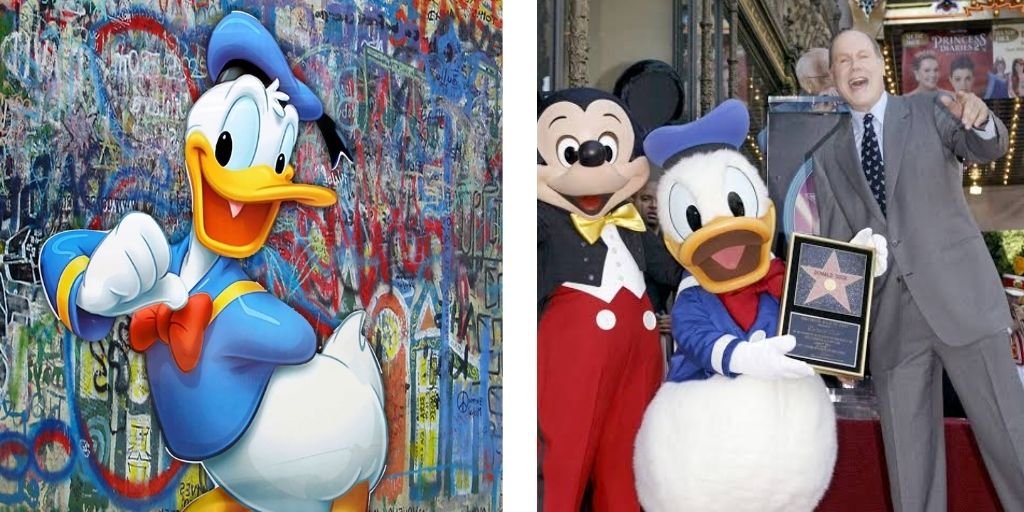
Donald Duck is one of the most recognizable cartoon characters in entertainment history. With his sailor shirt, distinctive voice, explosive temper, and unmistakable personality, he has entertained generations of audiences around the world. But what makes Donald so memorable? Is it his comedy, his constant bad luck, or the fact that his frustrations often feel surprisingly human?
Created by Walt Disney Productions in the 1930s, Donald developed from a supporting cartoon character into one of Disney’s most important personalities. Unlike the endlessly cheerful Mickey Mouse, Donald was imperfect, impatient, stubborn, emotional, and frequently overwhelmed by everyday problems. Those flaws became his greatest strengths.
Over the decades, he appeared in animated shorts, feature films, comic books, television programs, merchandise, theme parks, and video games. His adventures introduced audiences to a large group of memorable characters, including Daisy Duck, Huey, Dewey, Louie, and his wealthy uncle Scrooge McDuck.
This article explores Donald’s origins, personality, relationships, career, cultural impact, and lasting place in popular culture.
The Origins of Donald Duck
Donald first appeared during a period when animated characters were rapidly becoming major entertainment stars. He made his screen debut in “The Wise Little Hen” in 1934, an animated short produced by Walt Disney Productions.
In that early appearance, Donald was not yet the fully developed personality audiences would eventually recognize. He was presented as a somewhat lazy character who preferred avoiding work whenever possible. His appearance and personality gradually changed through subsequent cartoons.
One important reason for his popularity was his unusual voice. Clarence Nash, an American voice actor, originally performed the character’s distinctive speech. Donald’s voice was difficult to understand at times, but that became part of his charm rather than a weakness.
As Disney continued producing shorts, Donald became more expressive and more comedic. His temper became one of his defining characteristics, while his mischievous side created countless situations for humorous conflict.
It was almost as if Disney had taken the ordinary frustrations of everyday life and placed them inside a duck. When Donald lost his patience, audiences could recognize something familiar in his reaction.
How Donald’s Personality Developed
Donald is not simply an angry cartoon character. His personality contains several contrasting qualities.
Short-tempered: Donald can become frustrated very quickly. Small problems can turn into dramatic situations, creating much of the humor in his stories.
Determined: Although he often gets into trouble, he rarely gives up immediately. He frequently tries again after failure.
Proud: Donald wants to be respected and capable. When something makes him look foolish, he often becomes even more determined to prove himself.
Competitive: Whether he is competing with another character or trying to accomplish an ordinary task, Donald often takes things seriously.
Kind-hearted: Beneath his temper, Donald can be caring and loyal. He is not usually motivated by genuine cruelty.
Imperfect: Perhaps most importantly, Donald makes mistakes. He loses his patience, chooses poorly, and sometimes creates problems for himself.
This combination made him different from many traditional cartoon heroes. He did not always behave like the person audiences expected him to be. That unpredictability became an important part of his appeal.
Donald’s Famous Sailor Appearance
Donald’s visual design is almost as recognizable as his personality.
He is traditionally depicted wearing a sailor-style shirt and cap. His blue outfit, red bow tie, orange bill, and webbed feet form one of the most famous character designs in animation.
Interestingly, his clothing became part of his identity rather than simply being decoration. The sailor appearance helped establish him as visually distinct from other Disney characters.
His design has remained recognizable even as animation technology has changed dramatically. Artists have adapted him for different eras, styles, and formats without losing the basic elements that audiences associate with him.
That is a difficult achievement in character design. Many fictional characters become outdated when visual styles change, but Donald’s simple silhouette continues to work.
Donald Duck and His Famous Temper
What would Donald be without his temper?
His anger is probably the characteristic most people immediately associate with him. Yet his temper serves a deeper purpose in his stories. It creates conflict, and conflict creates comedy.
A minor inconvenience might cause Donald to become increasingly irritated. He may struggle with an object, argue with another character, or attempt to solve a simple problem. Instead of calmly walking away, he often becomes more determined.
The situation then escalates.
This pattern became a reliable formula for animated comedy. Donald’s frustration might begin with something completely ordinary, but his reaction transforms it into something extraordinary.
His temper also gives his character emotional range. He can move quickly from confidence to embarrassment, excitement to frustration, and anger to relief.
In that sense, Donald’s personality resembles a pressure cooker. The more problems he encounters, the more pressure builds until the inevitable comic explosion occurs.
Donald’s Relationship With Daisy Duck
Daisy Duck is one of the most important characters in Donald’s personal life.
Introduced as Donald’s romantic partner, Daisy is generally portrayed as confident, stylish, and strong-minded. Her personality often contrasts with Donald’s impulsive behavior.
Their relationship has been used for comedy for decades. Donald may try to impress Daisy, while Daisy may become frustrated by his behavior. Their disagreements create stories, but their connection usually remains central.
Daisy also helps show another side of Donald. Around her, he may become more romantic, protective, nervous, or eager to prove himself.
Their relationship demonstrates that Donald is more than a source of slapstick humor. He has emotional relationships that reveal his hopes and insecurities.
Huey, Dewey, and Louie
Donald’s nephews—Huey, Dewey, and Louie—are another major part of his world.
The three young ducks are famous for their matching outfits, energetic personalities, and frequent adventures. They are often cleverer and more resourceful than their uncle expects.
This creates a wonderful comic dynamic.
Donald frequently attempts to discipline or guide them, only to discover that their plans have created an even bigger situation. Sometimes the nephews cause trouble deliberately; at other times, they simply become caught up in an adventure.
Their relationship also gives Donald an opportunity to act as a guardian. Although he may become frustrated with them, he cares deeply about their well-being.
The nephews have become major Disney characters in their own right, appearing in comics, television adaptations, merchandise, and numerous other forms of entertainment.
Donald and Scrooge McDuck
Another major figure in Donald’s extended family is Scrooge McDuck.
Scrooge is Donald’s wealthy uncle and one of the central characters in Disney’s duck universe. Their personalities are often very different.
Scrooge is ambitious, energetic, adventurous, and extremely focused on business and treasure. Donald, meanwhile, often struggles with ordinary problems and financial difficulties.
Their differences make their interactions entertaining.
Donald also connects Scrooge to Huey, Dewey, and Louie’s adventures. This family network became especially important in Disney comic storytelling, where the duck characters were developed into a much larger fictional world.
Through these stories, Donald became part of an entire community rather than existing as an isolated cartoon personality.
Donald Duck in Animation
Animation is where Donald established his greatest legacy.
During the golden age of theatrical cartoons, he appeared in numerous shorts. These productions placed him in situations involving neighbors, friends, animals, work, family, and everyday challenges.
Many stories depended on visual comedy. Donald’s facial expressions, body movements, gestures, and voice allowed animators to communicate emotions without relying heavily on dialogue.
This made the character accessible to international audiences.
Donald also appeared alongside Mickey Mouse and Goofy in various productions. Their different personalities created natural comedic combinations.
Mickey was often the responsible leader. Goofy was innocent and accident-prone. Donald was emotional and argumentative.
Together, they formed a memorable trio whose contrasting personalities helped each character stand out.
Donald’s Role Beyond Short Cartoons
Donald eventually expanded far beyond theatrical animation.
He became a major figure in Disney comic books and newspaper strips. Artists and writers developed stories that could be much longer and more detailed than the original animated shorts.
Comic storytelling allowed Donald’s world to grow.
Readers encountered recurring characters, locations, family relationships, adventures, and humorous situations. Donald became part of a much larger fictional universe.
He also appeared in television programming and later became recognizable to new generations through home video, digital platforms, theme parks, toys, games, and other forms of media.
This ability to move between different forms of entertainment helped keep the character relevant.
A character who survives for decades is a little like a classic song: the arrangement may change, but the basic melody remains recognizable.
Donald Duck’s Cultural Impact
Donald’s importance extends beyond simple cartoon entertainment.
He became a symbol of animated comedy and one of Disney’s most internationally recognizable characters. His image has appeared on toys, clothing, books, posters, collectibles, stationery, household products, and countless other items.
His popularity also demonstrates the power of personality-driven storytelling.
Audiences did not love Donald because he was perfect. In fact, his imperfections were central to his appeal.
People could laugh when Donald became frustrated because they understood frustration themselves. Everyone has experienced a difficult day, an annoying problem, or a situation that did not go according to plan.
Donald simply experiences those moments with much more dramatic consequences.
His international popularity also demonstrates how visual comedy can cross language barriers. Even when viewers cannot understand every word of his unusual speech, his expressions and actions communicate enough to make the story understandable.
Donald Duck in Popular Culture
Over the years, Donald has remained part of the broader entertainment landscape.
He has appeared in Disney theme parks, merchandise collections, comic publications, television productions, and interactive entertainment. His image has also become associated with nostalgia for classic animation.
For many people, discovering Donald is a childhood experience. For others, revisiting his cartoons later in life reveals jokes and character details that were easy to overlook when they were younger.
This multi-generational appeal is one reason he continues to matter.
Donald also represents an important stage in the development of animated storytelling. Early cartoon characters were often built around exaggerated physical comedy. Over time, however, Donald became a character with recognizable relationships, motivations, and emotional patterns.
That evolution helped demonstrate how animation could create personalities that audiences followed for decades.
Why Donald Duck Still Matters Today
Why does a character created in the 1930s continue to attract attention?
The answer is partly simplicity.
Donald has a recognizable appearance, a distinctive voice, a clear personality, and a reliable source of conflict. Those ingredients make him easy to understand.
But there is something deeper.
Donald is relatable.
He gets angry. He wants to succeed. He tries to impress people. He makes mistakes. He becomes embarrassed. He wants recognition. Sometimes he simply wants things to go his way.
Who hasn’t felt something similar?
Modern audiences also live in a world filled with stress, deadlines, unexpected problems, and daily frustrations. Donald’s exaggerated reactions turn those ordinary experiences into comedy.
His stories remind us that failure does not always have to be serious. Sometimes you can laugh at the chaos and try again.
That may be one of the most enduring lessons hidden inside his adventures.
The Legacy of an Animated Icon
Donald Duck has survived because his character is flexible without losing his identity.
He can work in a short cartoon, a comic adventure, a television series, a video game, or a theme-park experience. His personality remains recognizable even when the setting changes.
His legacy is also tied to the artists, writers, animators, and voice performers who helped develop him across generations.
Clarence Nash’s performance played a particularly important role in establishing the sound associated with Donald. Later performers continued the tradition while adapting the character for new productions.
The result is a character whose personality feels larger than any individual production.
Donald is not simply a duck wearing a sailor shirt. He is a storytelling formula built around emotion, comedy, persistence, and imperfection.
That formula has proven remarkably durable.
Conclusion
Donald Duck remains one of animation’s most enduring personalities because he is both extraordinary and strangely familiar. His explosive temper, distinctive voice, sailor outfit, complicated relationships, and endless misadventures have created a character recognizable across generations.
From his early theatrical appearances to comics, television, merchandise, games, and theme parks, Donald has continued to evolve while maintaining the qualities that made audiences love him in the first place.
Perhaps his greatest strength is that he does not always get things right. He loses his patience, encounters bad luck, and occasionally makes his own problems worse. Yet he keeps going.
And maybe that is why Donald still feels relevant. Life rarely goes exactly as planned. Sometimes the best response is to take a breath, laugh at the situation, and try again.
FAQs
1. When did Donald Duck first appear?
Donald Duck made his first appearance in the 1934 animated short “The Wise Little Hen,” produced by Walt Disney Productions.
2. Who originally provided Donald Duck’s voice?
Clarence Nash was the original voice performer associated with Donald Duck. His distinctive vocal performance became one of the character’s defining features.
3. Who is Donald Duck’s girlfriend?
Daisy Duck is traditionally portrayed as Donald’s romantic partner. She has been an important character in his stories for many decades.
4. Who are Donald Duck’s nephews?
Huey, Dewey, and Louie are Donald’s famous nephews. They frequently appear with him in cartoons, comic stories, television productions, and other Disney entertainment.
5. Why is Donald Duck so popular?
Donald remains popular because of his distinctive appearance, unusual voice, emotional personality, physical comedy, and relatable imperfections. His stories can entertain both children and adults while remaining recognizable across generations.
