

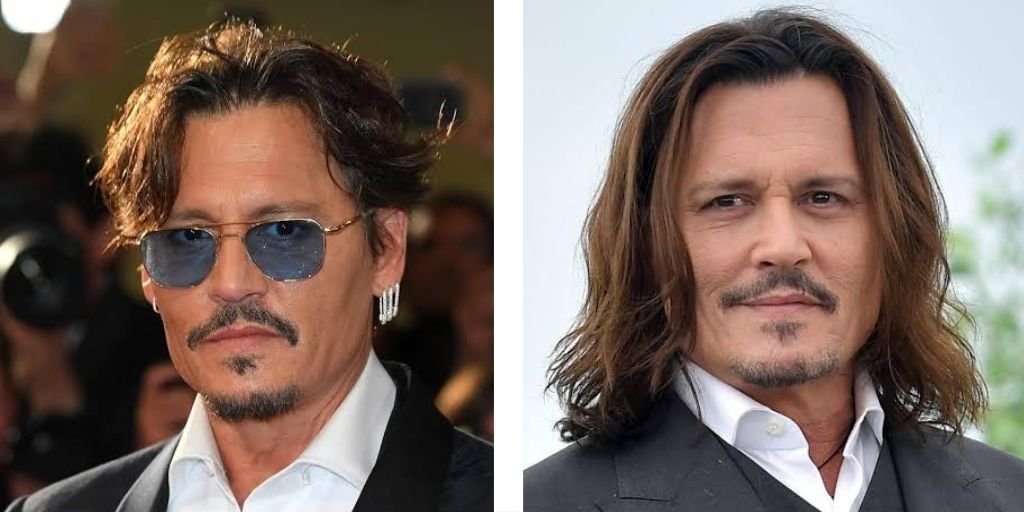
Johnny Depp is one of those actors whose name immediately brings a particular image to mind. For some people, he is Captain Jack Sparrow from Pirates of the Caribbean. For others, he is the mysterious Edward Scissorhands, the eccentric Willy Wonka, or one of the many unusual characters he has brought to the screen over several decades.
But what makes Depp’s career so interesting is that he has never followed a completely predictable path. He has moved between blockbuster entertainment, independent cinema, music, television, and stage performances while developing a reputation for choosing characters that are often strange, complicated, or unconventional.
Born in Kentucky and raised in Florida, Depp did not originally plan to become one of Hollywood’s biggest stars. His early dream involved music, and he spent time performing with bands before acting became his main profession. That musical background remained an important part of his life even after he became internationally famous.
His career has included major commercial successes, critically respected performances, awards, controversies, personal struggles, and periods of professional uncertainty. Through all these changes, he has remained a highly recognizable figure in popular culture.
This article explores Johnny Depp’s life and career, from his early years and breakthrough performances to his most memorable movies, musical interests, public controversies, and continuing influence on entertainment.
Early Life and the Road to Acting
Johnny Depp was born on June 9, 1963, in Owensboro, Kentucky. His family later moved to Florida, where he spent much of his childhood.
Unlike many actors who grow up dreaming about Hollywood, Depp’s first major passion was music. As a teenager, he became interested in playing guitar and eventually performed with different bands.
Music gave him a creative outlet and introduced him to the world of performance. However, his path changed when acting opportunities began appearing.
One of the most important early moments came when Depp moved to Los Angeles. He initially hoped to establish himself as a musician, but circumstances eventually pushed him toward acting.
His first major film role came in the horror movie A Nightmare on Elm Street in 1984. Although the role was relatively small, it introduced him to audiences and helped open the door to further opportunities.
Soon afterward, Depp appeared in television and film projects that allowed him to develop his acting skills. His role as Officer Tom Hanson on the television series 21 Jump Street made him widely recognizable among younger viewers.
However, Depp did not want to remain simply a television heartthrob. He wanted more challenging work.
That decision became one of the defining characteristics of his career.
From Teen Idol to Serious Actor
During the late 1980s and early 1990s, Depp deliberately moved away from conventional leading-man roles.
Instead of choosing characters designed only to make him look heroic or attractive, he often selected strange outsiders and emotionally complicated personalities.
This approach helped distinguish him from many other actors of his generation.
His performance in Edward Scissorhands, directed by Tim Burton, became particularly important. The character was gentle, lonely, and physically unusual, with scissors instead of hands.
Rather than playing Edward as a simple fantasy character, Depp gave him vulnerability and innocence. The movie became an important collaboration between Depp and Burton.
The pair later worked together on several other projects, creating one of the more recognizable actor-director partnerships in modern cinema.
Depp’s career choices during this period demonstrated something important: he was willing to take risks.
Hollywood can sometimes be compared to a highway where everyone is expected to drive in the same direction. Depp repeatedly chose the side road.
That willingness to experiment helped him build a reputation for unpredictability.
The Tim Burton Connection
Tim Burton played a major role in Depp’s development as a film actor.
Their creative partnership began with Edward Scissorhands and continued through movies such as Ed Wood, Sleepy Hollow, Charlie and the Chocolate Factory, Sweeney Todd: The Demon Barber of Fleet Street, and Dark Shadows.
Each project allowed Depp to explore a different kind of character.
In Ed Wood, he portrayed the real-life filmmaker Edward D. Wood Jr., a passionate but unsuccessful director whose determination was greater than his filmmaking ability.
In Sleepy Hollow, Depp played Ichabod Crane, bringing humor and nervous energy to a dark mystery.
In Charlie and the Chocolate Factory, he portrayed Willy Wonka in a highly stylized interpretation of Roald Dahl’s famous character.
Later, Sweeney Todd gave him an opportunity to combine acting and singing in a dark musical.
The collaboration worked because Burton often created unusual visual worlds, while Depp was comfortable inhabiting unusual personalities.
Their movies were not always universally praised, but they were rarely ordinary.
Captain Jack Sparrow and Global Stardom
If there is one character who transformed Depp’s career commercially, it is Captain Jack Sparrow.
When Pirates of the Caribbean: The Curse of the Black Pearl arrived in 2003, audiences were introduced to a pirate who behaved very differently from traditional action heroes.
Jack Sparrow was clever, unreliable, funny, theatrical, and constantly looking for a way to escape danger.
Depp’s performance became the heart of the film.
Instead of portraying a pirate as a straightforward warrior, he created a character whose movements, speech, expressions, and sense of humor made him instantly recognizable.
The role earned Depp an Academy Award nomination for Best Actor and turned the Pirates of the Caribbean series into a global franchise.
Sequels followed, including Dead Man’s Chest, At World’s End, On Stranger Tides, and Dead Men Tell No Tales.
The success of the franchise made Depp one of the world’s highest-profile movie stars.
Jack Sparrow also became a major part of popular culture. Costumes, merchandise, theme-park attractions, quotes, and countless impressions helped establish the character far beyond the movies themselves.
Johnny Depp’s Most Notable Movies
Depp’s filmography is unusually varied.
Some of his best-known projects include:
- Edward Scissorhands
- What’s Eating Gilbert Grape
- Ed Wood
- Donnie Brasco
- Fear and Loathing in Las Vegas
- Sleepy Hollow
- Blow
- Finding Neverland
- Charlie and the Chocolate Factory
- Sweeney Todd: The Demon Barber of Fleet Street
- Alice in Wonderland
- The Tourist
- Black Mass
- Fantastic Beasts and Where to Find Them
- Minamata
These films demonstrate how difficult it is to place Depp into a single category.
He has played criminals, detectives, musicians, fantasy characters, historical figures, romantic leads, villains, comedians, and deeply troubled individuals.
One particularly respected performance came in What’s Eating Gilbert Grape, where he starred alongside Leonardo DiCaprio.
Another notable role was George Jung in Blow, a film about the rise and fall of a major American drug trafficker. Depp’s performance focused heavily on the character’s personal relationships and gradual downfall.
In Black Mass, he portrayed Boston gangster Whitey Bulger. The performance was darker and more restrained than many of his eccentric roles.
These projects showed that his abilities extended beyond fantasy and comedy.
Awards and Recognition
Over the course of his career, Depp has received considerable recognition from major entertainment organizations.
He has been nominated for Academy Awards for performances including Captain Jack Sparrow in Pirates of the Caribbean: The Curse of the Black Pearl, J. M. Barrie in Finding Neverland, and Sweeney Todd in Sweeney Todd: The Demon Barber of Fleet Street.
He has also received Golden Globe recognition and won the Golden Globe for Best Actor in a Musical or Comedy for Sweeney Todd.
His career has additionally been recognized through numerous other awards and nominations.
However, awards tell only part of an actor’s story.
Some performers become memorable because they repeatedly win trophies. Others become memorable because audiences continue discussing their characters years later.
Depp belongs strongly to the second category.
Captain Jack Sparrow, Edward Scissorhands, Willy Wonka, and Sweeney Todd have each developed lives beyond their original performances.
His Passion for Music
Long before he became internationally famous as an actor, Depp wanted to be a musician.
That interest never disappeared.
He has played guitar and worked with musicians throughout his career. His musical activities have included performances with established artists and participation in recording projects.
One notable chapter came through his involvement with the rock supergroup Hollywood Vampires, formed with Alice Cooper and Joe Perry.
The group combines Depp’s long-standing love of rock music with his established entertainment career.
His musical background has also influenced some of his acting performances.
Sweeney Todd, for example, required him to sing extensively. Although Depp was primarily known as an actor rather than a professional singer, the role demonstrated his willingness to take on demanding creative challenges.
His connection to music also helps explain why his career has never been limited to traditional Hollywood acting.
For Depp, performance has always involved multiple forms of expression.
Public Image and Personal Life
Johnny Depp’s public image has changed dramatically over the years.
During his early career, he was often presented as a rebellious young actor and alternative heartthrob. Later, his eccentric movie characters became a central part of his public identity.
His relationships and personal life have also received enormous media attention.
Depp was previously married to Lori Anne Allison and later to actress Amber Heard. His relationship with Heard became the subject of highly publicized legal proceedings and intense international media coverage.
Because these matters involved serious allegations and court proceedings, they should be discussed carefully rather than reduced to simple celebrity gossip.
The legal disputes attracted enormous public attention, with supporters and critics on both sides expressing strong opinions.
The proceedings also affected public perceptions of Depp’s career.
It is important to distinguish between verified court records, legal findings, allegations, media reports, and opinions expressed online. Celebrity disputes can become extremely complicated, especially when millions of people discuss them through social media.
The Legal Battles and Their Impact on His Career
The legal disputes involving Depp and Heard became one of the most heavily covered celebrity stories of the 2020s.
Depp sued Heard for defamation in the United States over an opinion article she had written, while Heard brought a counterclaim.
In 2022, a Virginia jury found largely in Depp’s favor on his claims and also found in Heard’s favor on one aspect of her counterclaim. The case resulted in substantial damages being awarded, subject to later legal developments and an agreement between the parties.
The trial was televised and discussed extensively online.
The cultural impact was significant.
People debated evidence, testimony, media coverage, and the behavior of both individuals. The case became a major example of how celebrity litigation can develop into a worldwide public spectacle.
It also had professional consequences.
Depp’s relationship with major Hollywood franchises changed during this period, and his career entered a different phase.
For audiences, the legal proceedings became another chapter in a career that had already experienced significant highs and lows.
Career Challenges and Reinvention
Hollywood careers rarely move in a straight line.
Even highly successful performers eventually experience periods when projects fail, public interest changes, or professional relationships shift.
Depp’s career illustrates this clearly.
After years of enormous commercial success, his association with major studio franchises became more complicated.
Yet he continued working.
His role in Minamata demonstrated his interest in serious dramatic material. The film tells the story of photographer W. Eugene Smith and his documentation of mercury poisoning in Japan.
In 2023, Depp appeared as King Louis XV in Jeanne du Barry, a French historical drama directed by and starring Maïwenn.
The film marked a notable return to major film work following years of intense public scrutiny.
Instead of attempting to recreate the exact career he had before, Depp entered a new phase.
That ability to reinvent oneself can be one of the most important qualities in entertainment.
Johnny Depp’s Influence on Popular Culture
Few actors have created as many visually distinctive characters as Depp.
His characters often feature recognizable voices, gestures, costumes, hairstyles, and personalities.
Captain Jack Sparrow alone became a cultural reference point.
Edward Scissorhands became an icon of outsider cinema.
Willy Wonka received a new interpretation through Depp’s performance.
Sweeney Todd demonstrated his ability to combine acting with musical performance.
What makes these characters memorable?
Perhaps it is the fact that they rarely feel completely conventional.
Depp often gives audiences characters who exist slightly outside normal society. They may be misunderstood, eccentric, dangerous, lonely, humorous, or all of these things at once.
This recurring theme has helped define his artistic identity.
His influence can also be seen in costume design, fan communities, entertainment discussions, and the continued popularity of his older movies.
What Makes His Acting Style Different?
Depp’s acting style is built around transformation.
Rather than simply changing his appearance, he often changes the entire physical behavior of a character.
The way a character walks, speaks, looks at another person, or reacts to danger can become just as important as the dialogue.
Captain Jack Sparrow is an excellent example.
His unusual walk, pauses, facial expressions, and deliberately unpredictable behavior helped make the character distinctive.
At other times, Depp has taken a more restrained approach.
In Donnie Brasco, for example, his performance is much more grounded.
In Black Mass, he largely suppresses the playful eccentricity associated with some of his earlier roles.
This range is one reason his filmography remains interesting.
You never quite know what version of the actor will appear next.
Depp’s Legacy in Hollywood
Johnny Depp’s legacy is complicated but undeniably significant.
He became one of the defining actors of his generation by combining commercial movies with unconventional performances.
His career demonstrates that an actor does not necessarily have to fit a traditional Hollywood mold to become globally successful.
He also showed how a single performance can reshape an entire franchise.
Captain Jack Sparrow turned a pirate adventure into a character-driven cultural phenomenon.
At the same time, his career illustrates the risks that come with extreme fame.
Public scrutiny can become overwhelming when professional success, relationships, legal disputes, and personal behavior all become subjects of worldwide discussion.
Nevertheless, his influence on modern popular cinema remains substantial.
For many viewers, his characters are connected to specific memories: discovering Edward Scissorhands, watching Pirates of the Caribbean with family, seeing Charlie and the Chocolate Factory as a child, or discovering his darker dramatic performances later in life.
That emotional connection is difficult to measure with statistics.
Why Audiences Continue to Be Interested
Why does Johnny Depp remain such a widely discussed figure?
One reason is his unusual career story.
He began as a musician, became a television actor, developed into a respected film performer, became a global blockbuster star, faced major professional and personal challenges, and later returned to international cinema.
Another reason is his unpredictability.
Audiences often feel that Depp is most interesting when he is doing something unexpected.
His career is like a book with several very different chapters. Just when one chapter seems finished, another begins.
That quality keeps people interested in what he might do next.
Younger audiences may know him primarily as Captain Jack Sparrow, while older movie fans may remember his early dramatic work.
Different generations can therefore have completely different reasons for watching his films.
Conclusion
Johnny Depp’s career is far more complicated than a list of famous movies. It is a story of ambition, experimentation, extraordinary success, controversy, reinvention, and artistic curiosity.
From his early musical ambitions and television work to iconic performances in Edward Scissorhands and Pirates of the Caribbean, he has repeatedly chosen unusual paths.
His public life has also demonstrated the complicated relationship between celebrity and media attention. Regardless of how individual viewers interpret the controversies surrounding him, his contribution to popular cinema cannot easily be ignored.
Perhaps the most lasting part of his career is his ability to make characters feel unmistakable. Whether the role is funny, frightening, tragic, eccentric, or adventurous, Depp has often approached it with a willingness to transform himself.
His future work may take a different direction from the blockbuster years, but his most memorable performances have already secured a distinctive place in modern entertainment history.
FAQs
1. Who is Johnny Depp?
Johnny Depp is an American actor and musician known for films such as Edward Scissorhands, Pirates of the Caribbean, Finding Neverland, Sweeney Todd, and Black Mass.
2. What is Johnny Depp’s most famous character?
His most internationally recognized character is Captain Jack Sparrow from the Pirates of the Caribbean film series. The role became one of the most recognizable characters in modern adventure cinema.
3. Did Johnny Depp start his career as a musician?
Yes. Music was one of Depp’s earliest ambitions. He played guitar and performed with bands before establishing himself as a professional actor.
4. Has Johnny Depp won major acting awards?
Yes. Depp has received numerous awards and nominations throughout his career. He won a Golden Globe for his performance in Sweeney Todd: The Demon Barber of Fleet Street and has received multiple Academy Award nominations.
5. What is Johnny Depp doing now?
Depp has continued pursuing film and music projects following several years of intense public and legal attention. His later career has included international productions such as Jeanne du Barry, reflecting his continued interest in acting outside traditional Hollywood franchises.
