

David Letterman is one of those television personalities who changed the rules without appearing to follow a rulebook. For more than three decades, he turned late-night television into a place where traditional interviews could suddenly become absurd, celebrities could be teased, and ordinary objects could become the center of a joke.
Born in Indianapolis, Indiana, Letterman developed a style that was dry, unpredictable, sarcastic, and often deliberately awkward. His approach was different from the polished, comfortable hosting style that dominated television before him. Instead of simply introducing famous guests and promoting their latest projects, he questioned the format itself.
From Late Night with David Letterman on NBC to The Late Show with David Letterman on CBS and later Netflix’s My Next Guest Needs No Introduction, his career has stretched across several generations of television. Netflix describes his later series as a combination of humor, curiosity, in-depth conversations, and excursions with notable guests.
So, what made Letterman so important? And why does his influence remain visible even after his retirement from traditional late-night television? His story offers an interesting look at comedy, broadcasting, celebrity culture, and the changing relationship between television hosts and audiences.
Early Life and the Road to Broadcasting
David Michael Letterman was born on April 12, 1947, in Indianapolis, Indiana. His father, Harry Joseph Letterman, worked as a florist and was known within the family for his humor and storytelling. His mother, Dorothy, worked as a church secretary.
Growing up, Letterman was fascinated by radio and television. Rather than dreaming of becoming a conventional movie star, he was drawn toward broadcasting. That interest eventually led him to Ball State University in Muncie, Indiana, where he studied communications and became involved with the student radio station.
His early career was not an overnight success. Letterman worked as a radio announcer and weather presenter before moving toward television comedy. His unusual personality sometimes made him seem almost too unconventional for mainstream broadcasting.
That quality, however, eventually became his greatest advantage.
Letterman’s early broadcasting work helped him understand something important: audiences respond to authenticity. He did not need to behave like the stereotypical television personality. His deadpan delivery, awkward pauses, sarcasm, and willingness to make himself the target of jokes became part of his identity.
In many ways, his career was like a small radio signal that gradually became a national broadcast. The unusual qualities that might have seemed like weaknesses early on eventually became the foundation of his success.
The Stand-Up Comedy Years
Before becoming a household name, Letterman spent years developing his comedy in clubs and on television.
Stand-up comedy gave him the opportunity to experiment. Instead of relying entirely on traditional jokes with obvious punchlines, he developed observations built around exaggeration, surprise, and absurdity.
His humor often sounded conversational. He could take something completely ordinary and turn it into something ridiculous.
This style became particularly effective on television because Letterman understood timing. He knew when to pause, when to look confused, and when to allow an awkward moment to become part of the joke.
His stand-up career also introduced him to the wider entertainment industry. Eventually, his television appearances attracted attention from producers and audiences who recognized that he had something different to offer.
One of his most important opportunities came when he became a guest host on The Tonight Show Starring Johnny Carson.
That connection mattered enormously.
Carson was the dominant figure in American late-night television, and appearing on his program gave Letterman a national audience. Letterman’s performances showed that he could handle a large television audience while maintaining his unusual comedic personality.
Late Night with David Letterman Changes Television
On February 1, 1982, Letterman began hosting Late Night with David Letterman on NBC.
The program quickly became known for its unconventional approach.
Rather than treating late-night television as a simple combination of celebrity interviews, monologues, and musical performances, Letterman used the show as a playground for comedy.
There were strange sketches, unusual audience interactions, bizarre props, eccentric guests, and recurring segments that seemed to appear simply because someone thought they might be funny.
This was one of the biggest differences between Letterman and traditional talk-show hosts.
He did not always try to make the television experience look smooth.
Sometimes the awkwardness was the entertainment.
The program became especially popular among younger viewers and people who wanted something different from conventional entertainment. The Peabody Awards later recognized Late Night for its freshness and imagination, describing Letterman’s approach as a major force in reshaping the late-night format.
The Top 10 List
One of Letterman’s most recognizable contributions was the Top 10 List.
The concept was simple: take a topic and create a humorous list of ten items.
But the execution became iconic.
The lists allowed writers to explore politics, celebrities, everyday life, television, sports, and current events through exaggerated comedy. The format was easy for audiences to understand and flexible enough to remain useful for years.
Stupid Pet Tricks and Unexpected Comedy
Another memorable feature was Stupid Pet Tricks, where ordinary people brought animals with unusual talents onto the program.
The segment worked because it was deliberately different from glamorous celebrity television.
Instead of presenting perfection, Letterman celebrated weirdness.
There were also strange demonstrations, ridiculous games, unusual audience participation, and recurring visual jokes. These ideas helped establish a new language for late-night entertainment.
The show did not simply tell viewers what was funny.
It invited them to discover the humor in situations that were normally ignored.
The Johnny Carson Connection and the NBC-CBS Transition
Letterman’s relationship with Johnny Carson became one of the most important stories in late-night television.
When Carson prepared to leave The Tonight Show, Letterman was widely regarded as one of the major candidates to succeed him. Instead, NBC selected Jay Leno.
Letterman then made a major career decision.
He moved to CBS.
The move was more than a network change. It became one of the most famous rivalries in television history.
Letterman’s new program, The Late Show with David Letterman, premiered on August 30, 1993, from the Ed Sullivan Theater in New York.
CBS’s decision created a direct competition between Letterman and Leno, with both hosts competing for viewers in the same late-night time period.
For many viewers, the rivalry represented two different approaches to comedy.
Leno generally offered a more traditional and accessible late-night format. Letterman continued to lean toward irony, experimentation, awkwardness, and unpredictability.
Neither approach was inherently better. They simply appealed to different audiences.
Letterman’s CBS program became a major institution in its own right. According to CBS News, he hosted more than 6,000 combined episodes of Late Night and The Late Show before leaving the position in 2015.
What Made David Letterman’s Comedy Different?
What exactly was the Letterman style?
It is difficult to describe with only one word.
It was sarcastic, observational, dry, self-aware, unpredictable, and sometimes deliberately uncomfortable.
Letterman often appeared as if he were amused by the television program itself.
He could interview a famous actor and then suddenly shift attention toward something happening in the studio. He might interrupt a serious conversation with an absurd observation. He could make a mistake and turn that mistake into the joke.
This created an unusual relationship with viewers.
Audiences felt that they were watching a person rather than simply watching a host perform a carefully prepared role.
The Art of the Awkward Moment
One of Letterman’s greatest comedic tools was discomfort.
An awkward silence that might make another host nervous could become the centerpiece of his joke.
A strange answer from a guest could lead somewhere completely unexpected.
A technical problem could become entertainment.
This was a significant change in television comedy. Instead of hiding imperfections, Letterman often exposed them.
It was almost like watching a magician explain that the trick was not supposed to work perfectly—and somehow making that explanation more entertaining than the trick itself.
Letterman’s Relationship With Guests
Celebrity interviews became a major part of Letterman’s career.
But his interviews were rarely conventional.
He could be respectful one moment and teasing the next. Some guests appeared nervous because they could not predict where the conversation would go.
That unpredictability became part of the appeal.
Over time, Letterman interviewed actors, musicians, athletes, politicians, authors, comedians, business leaders, and cultural figures.
His interviewing style also evolved.
In the early years, his humor could dominate the conversation. Later in his career, particularly on Netflix, he increasingly demonstrated genuine curiosity about his guests.
This evolution is important.
A television personality who spends decades in the public eye cannot remain exactly the same forever. Letterman gradually moved from being the disruptive young comedian challenging television conventions to becoming an experienced interviewer interested in people’s lives.
That transformation became particularly visible after he left CBS.
The Final Years of The Late Show
In April 2014, Letterman announced that he would retire from The Late Show.
His final episode aired on May 20, 2015.
By then, he had spent more than 30 years as a late-night host. CBS noted that his CBS program had earned numerous Emmy nominations and that he had hosted thousands of broadcasts across his two major late-night programs.
Stephen Colbert was selected as his successor.
Letterman’s departure represented the end of an era.
For viewers who had grown up watching him, it was difficult to imagine late-night television without his gray hair, suit, desk, sarcastic expressions, and distinctive laugh.
Yet Letterman did not disappear.
Instead, he entered a new phase.
Life After Traditional Late-Night Television
Retirement did not last forever.
In 2018, Letterman returned to television with Netflix’s My Next Guest Needs No Introduction with David Letterman.
The format was different from his old programs.
There was no need to produce a daily late-night show. Instead, Letterman could focus on longer conversations with selected guests.
The first season included major figures such as Barack Obama, George Clooney, Malala Yousafzai, Jay-Z, Tina Fey, and Howard Stern. Netflix described the program as combining deep interviews with field segments that allowed Letterman to explore subjects outside a traditional studio.
This format suited the older Letterman remarkably well.
He no longer needed to deliver a monologue every night.
He could slow down.
He could listen.
He could ask follow-up questions.
And he could satisfy his natural curiosity.
My Next Guest Needs No Introduction
The Netflix series gave audiences a different version of Letterman.
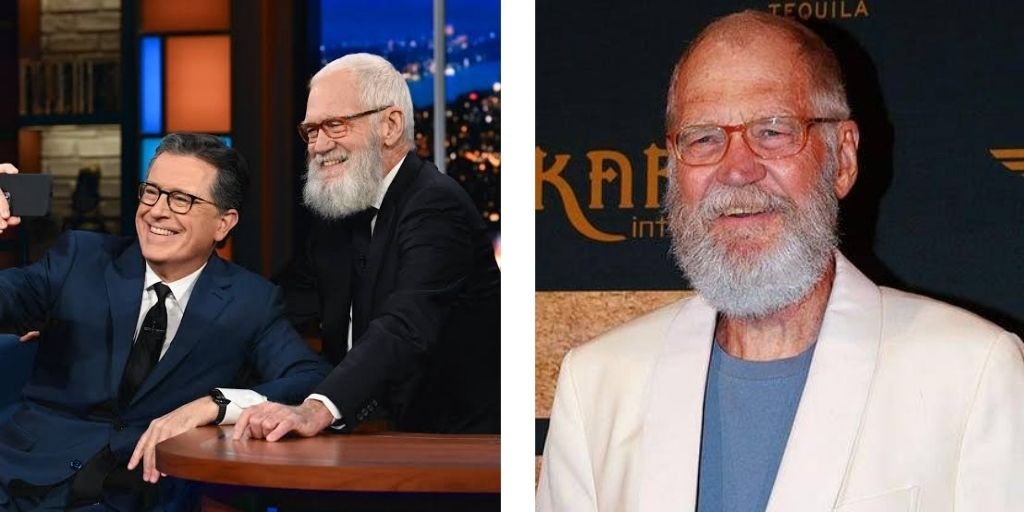
The famous beard became part of his new appearance, but the bigger change was his attitude.
The program allowed him to spend meaningful time with guests rather than rushing through short promotional interviews.
The conversations could move from comedy to personal stories, careers, failures, achievements, childhood experiences, and larger questions about life.
Netflix’s current listing identifies the program as a talk show built around insightful conversations and excursions with notable figures. The series has continued through multiple seasons and earned an Emmy for Outstanding Hosted Nonfiction Series or Special in 2024.
A More Curious Letterman
Perhaps the most interesting thing about the Netflix era is that Letterman’s curiosity became more obvious.
He could still be sarcastic.
He could still make a strange joke.
But he seemed less interested in proving that he was the smartest person in the room.
Instead, he often allowed guests to tell their stories.
That made the interviews feel more relaxed.
It also demonstrated an important lesson about aging in entertainment: a comedian does not necessarily become less interesting with age. Sometimes experience simply changes the questions.
Awards, Recognition, and Cultural Impact
Letterman’s career has received significant recognition.
He was honored with the Peabody Award, which praised his contribution to television and his role in reshaping late-night entertainment.
He also received the Kennedy Center Honors in 2012, recognizing his contribution to American culture through the performing arts.
In 2017, he received the Mark Twain Prize for American Humor, another major recognition of his impact on comedy.
These honors are important because Letterman’s influence goes beyond ratings.
He helped change what audiences expected from a television host.
Before his rise, talk shows generally followed recognizable patterns. After Letterman’s success, hosts had greater freedom to experiment.
The late-night format became more flexible.
Hosts could be sarcastic.
They could break the fourth wall.
They could interact with audiences differently.
They could use sketches, recurring characters, absurd demonstrations, and unusual comedy.
In that sense, Letterman helped build a bridge between traditional television and the more informal comedy culture that later became common on cable, digital platforms, podcasts, and social media.
David Letterman’s Influence on Future Comedians
It is difficult to discuss modern late-night comedy without considering Letterman’s influence.
Many comedians and hosts who followed him adopted some element of his approach.
The willingness to be awkward became more acceptable.
Self-deprecating humor became more common.
The idea that the host could openly acknowledge the artificial nature of television became increasingly normal.
Even the structure of comedy programs changed.
A host did not always need to act like an untouchable celebrity.
The host could appear confused, vulnerable, sarcastic, or even ridiculous.
This was a major cultural shift.
Letterman’s influence can also be seen in the careers of performers who appeared on his programs. His shows gave opportunities to comedians, writers, musicians, and performers who later became major figures.
His production company, Worldwide Pants, was also involved with television programs beyond Letterman’s own shows, including Everybody Loves Raymond and The Late Late Show. Netflix has noted the company’s role in producing several successful television projects.
David Letterman’s Personal Side and Public Image
For someone who spent so much time on television, Letterman has generally maintained a degree of privacy about his personal life.
That contrast is interesting.
His professional personality was loud, strange, and unpredictable, while his private life has often remained much more controlled.
Over the years, however, he has spoken publicly about difficult experiences and personal challenges.
One of the qualities that made him relatable was his willingness to acknowledge imperfection.
He never presented himself as the perfect celebrity.
He could be stubborn.
He could be uncomfortable.
He could make mistakes.
He could laugh at himself.
That human quality helped audiences connect with him even when they did not always understand his humor.
The Peabody Awards specifically recognized how Letterman’s work could move between absurd comedy and sincere commentary, noting moments in which he addressed serious subjects with unusual honesty.
Why David Letterman Still Matters Today
Why should a modern audience care about a television host whose most famous daily program ended years ago?
Because the entertainment environment he helped create is still around us.
Today’s audiences are accustomed to hosts who speak casually, comedians who challenge television conventions, and interview programs that mix serious discussion with humor.
That was not always the case.
Letterman helped make that approach mainstream.
His legacy is not simply a collection of jokes or television segments. It is an attitude toward entertainment.
Be curious.
Question the obvious.
Do not be afraid of silence.
Make fun of yourself.
Experiment.
And when something goes wrong, perhaps it can become the funniest part of the show.
His continuing work on Netflix demonstrates that his curiosity has not disappeared. The sixth season of My Next Guest Needs No Introduction premiered in 2025, while reporting in August 2026 indicated that a seventh season featuring guests including Matt Damon, Julia Roberts, Jimmy Kimmel, and Alex Honnold was planned for later in 2026.
That continued relevance is remarkable.
Many entertainers become associated with one particular era. Letterman, however, has managed to remain part of the conversation across multiple generations of television.
The Enduring Legacy of a Television Original
David Letterman’s career can be viewed as a long experiment in what television could become.
He began as a broadcaster who seemed almost too unusual for mainstream television. He became a stand-up comedian, a late-night pioneer, a network television institution, a producer, an award-winning personality, and eventually a long-form interviewer.
His career demonstrates that originality can have extraordinary staying power.
Letterman did not simply imitate the hosts who came before him. He created a style that others could imitate later.
That may be the clearest definition of influence.
A truly influential entertainer changes the environment around them.
The Peabody Awards described Letterman’s imprint as being visible throughout late-night television, emphasizing how his approach reshaped both the tone and form of the genre.
And that is perhaps why his name remains recognizable.
People may remember the Top 10 lists.
They may remember the strange sketches.
They may remember his interviews.
They may remember the beard and Netflix conversations.
But the larger legacy is simpler: David Letterman made television less predictable.
Conclusion
David Letterman’s journey from an Indianapolis broadcaster to one of America’s most influential television personalities is a story about originality, persistence, and reinvention. His groundbreaking NBC program challenged traditional late-night conventions, while his CBS career established him as a lasting television institution. After retirement, he surprised audiences again by returning with a slower, more thoughtful interview format on Netflix.
His greatest contribution may not be any single joke or segment. It is the permission he gave future entertainers to be strange, honest, experimental, and imperfect. In a medium often built around polish, Letterman showed that the unexpected could be more entertaining than perfection.
His career is like a long-running conversation with television itself: sometimes funny, sometimes uncomfortable, occasionally serious, but rarely predictable. That is why his influence continues long after his traditional late-night era ended.
Frequently Asked Questions
1. Who is David Letterman?
David Letterman is an American comedian, television host, writer, and producer best known for hosting Late Night with David Letterman on NBC and The Late Show with David Letterman on CBS. He later returned to television with Netflix’s My Next Guest Needs No Introduction with David Letterman.
2. When did David Letterman retire from The Late Show?
David Letterman hosted his final episode of The Late Show on May 20, 2015. He had announced his retirement in April 2014 after more than three decades as a late-night television host.
3. What is David Letterman’s Netflix show called?
His Netflix program is called My Next Guest Needs No Introduction with David Letterman. The show focuses on longer conversations with notable guests and often includes excursions outside the studio.
4. What made David Letterman’s comedy style unique?
His comedy was known for sarcasm, dry humor, awkward situations, absurd sketches, self-deprecation, unpredictable interviews, and a willingness to make fun of television itself. His unconventional approach helped reshape late-night entertainment.
5. What awards has David Letterman received?
Among his major honors are the Peabody Award, Kennedy Center Honors, and Mark Twain Prize for American Humor. His career has also received extensive recognition from television and comedy organizations.
