

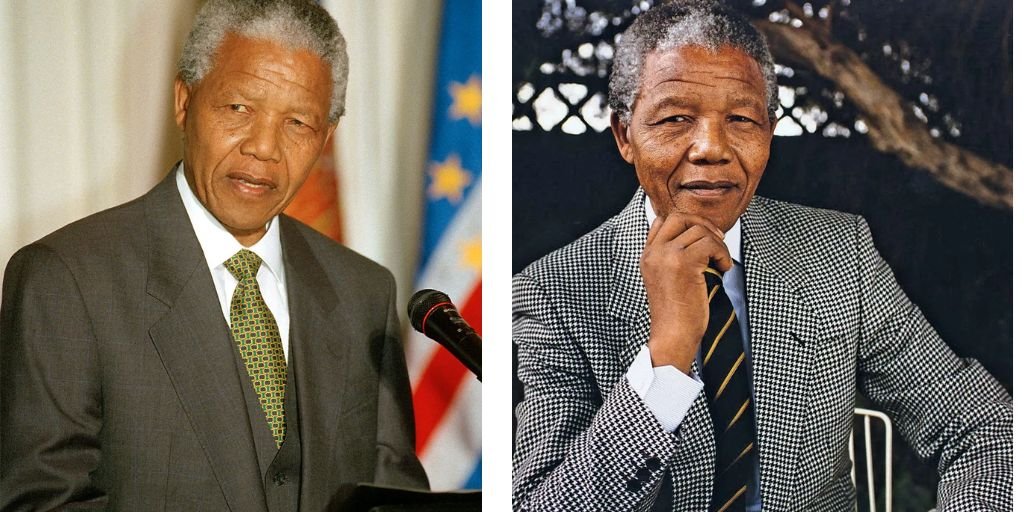
Nelson Mandela is remembered around the world as a symbol of courage, equality, reconciliation, and freedom. His life was shaped by one of the most difficult periods in South African history, yet his response to injustice went far beyond political resistance. He became a leader who showed that changing a country is not only about defeating an opponent; it can also mean finding a way for divided people to live together.
Born in 1918 in South Africa, Mandela grew up in a traditional community before becoming a lawyer, political activist, prisoner, president, and global statesman. He spent 27 years behind bars because of his opposition to apartheid, the system of racial segregation that denied the Black majority basic political and social rights. When he finally walked out of prison in 1990, many expected anger and revenge. Instead, he helped guide South Africa toward democracy.
His story is not simply about politics. It is about perseverance, sacrifice, forgiveness, and the belief that ordinary people can contribute to extraordinary change. So, what made his journey so remarkable? To understand that, we need to look at his early life, his political awakening, his years in prison, and the leadership he demonstrated after freedom.
Early Life and Family Background
Nelson Rolihlahla Mandela was born on July 18, 1918, in the village of Mvezo in the Transkei region of South Africa. His birth name was Rolihlahla, a Xhosa name that is often explained as meaning “pulling a branch of a tree,” though it is also commonly associated with the idea of a troublemaker.
Mandela belonged to the Thembu royal family. His father, Gadla Henry Mphakanyiswa, served as a local chief and adviser to the Thembu king. Although Mandela was connected to traditional leadership, his childhood was not spent in a palace. He experienced village life and learned about community traditions, storytelling, responsibility, and leadership.
After his father died when Mandela was young, he became a ward of Jongintaba Dalindyebo, the acting regent of the Thembu people. This changed the direction of his upbringing. At the regent’s household, Mandela observed traditional discussions about community affairs. Important decisions were often made through consultation, with people allowed to express their views before a conclusion was reached.
That experience later influenced Mandela’s understanding of leadership. He came to appreciate the idea that a leader should listen rather than simply command.
Education also played an important role in his development. Mandela attended Methodist schools and eventually studied at the University College of Fort Hare. He later continued his education in Johannesburg and studied law.
His education exposed him to a wider world. He encountered people from different backgrounds and became increasingly aware of the racial inequalities built into South African society.
Discovering the Reality of Apartheid
To understand Mandela’s contribution, it is important to understand the society he challenged.
Apartheid became South Africa’s official system of racial segregation after the National Party came to power in 1948. However, racial discrimination and unequal treatment had existed long before that date. Apartheid transformed these inequalities into an extensive legal and political system.
People were classified according to race, and these classifications affected where they could live, work, study, travel, and participate politically. The Black majority was denied the same political rights and opportunities available to white citizens.
For many people, apartheid was not an abstract political concept. It shaped everyday life.
Imagine being told where you could live because of your skin color, being restricted from certain areas, or having your political voice controlled by laws designed without your consent. This was the reality faced by millions of South Africans.
Mandela’s experiences in Johannesburg made the injustice increasingly difficult to ignore. He saw firsthand how discriminatory laws affected Black South Africans.
He joined the African National Congress, or ANC, in the 1940s. Along with other young activists, he became part of a generation demanding stronger action against racial discrimination.
In 1944, Mandela helped establish the ANC Youth League with figures including Walter Sisulu and Oliver Tambo. The organization pushed for a more energetic approach to political activism.
Mandela’s political beliefs developed over time. He initially supported nonviolent resistance, influenced by movements that demonstrated the power of organized civil action. However, increasing government repression eventually changed his thinking about how resistance should be conducted.
The Rise of a Political Leader
Mandela became increasingly prominent within the anti-apartheid movement during the 1950s.
He and Oliver Tambo established a law practice in Johannesburg. The firm provided legal assistance to Black South Africans who often faced discrimination and legal difficulties under apartheid laws.
The office became more than a place of business. It was also a place where people could seek help against an unjust system.
Mandela’s political activities brought him into direct conflict with the government. He was repeatedly arrested and restricted. In 1952, he helped lead the Defiance Campaign, a major campaign against discriminatory laws.
The government responded with arrests and restrictions, but resistance continued.
One of the most important moments came with the Freedom Charter adopted at the Congress of the People in 1955. The document presented a vision of a democratic South Africa in which all citizens would have equal political rights.
The statement reflected a fundamental idea: the future of South Africa should belong to everyone who lived there, rather than to one racial group.
Government authorities increasingly treated Mandela and other activists as serious threats. The Rivonia Trial later became one of the defining moments of his life.
Rivonia Trial and the Road to Prison
In the early 1960s, political repression in South Africa intensified. The ANC was banned, and Mandela went underground.
In 1961, he became involved in establishing Umkhonto we Sizwe, commonly known as MK, the armed wing associated with the ANC. Its formation followed the Sharpeville massacre of 1960, when police killed demonstrators protesting apartheid pass laws.
Mandela later explained that the decision to support sabotage came after peaceful methods appeared increasingly ineffective under severe government repression. MK initially focused on attacks against infrastructure rather than deliberately targeting civilians.
Mandela was arrested in 1962 and sentenced to prison. Later, he and other defendants faced the Rivonia Trial, which became a major international story.
During the trial, Mandela acknowledged his political goals and explained his opposition to racial domination. His words became an important expression of his belief in a democratic society.
In 1964, he was sentenced to life imprisonment.
For Mandela, freedom would not come quickly. He would spend the next 27 years in prison.
Life Behind Bars
Mandela’s imprisonment is one of the most extraordinary parts of his story.
He spent many years at Robben Island, a prison located off the coast of Cape Town. Prison conditions were harsh. Political prisoners were treated differently from ordinary prisoners, and racial discrimination continued inside the prison system.
Mandela worked in a lime quarry and endured strict restrictions. His correspondence and visits were limited. Yet prison did not destroy his political influence.
Instead, he became a respected figure among prisoners.
Mandela understood that prison could be viewed in two ways. It could be a place designed to break a person, or it could become a place for learning, reflection, and preparation. He chose the second path.
He continued studying and encouraged other prisoners to educate themselves. Political prisoners debated ideas, discussed history, and tried to understand the society they hoped to build.
Mandela also worked on improving his own leadership.
This period teaches an important lesson about resilience. Sometimes progress is not visible from the outside. A seed beneath the soil may appear inactive, but something important is happening underground. Mandela’s years in prison were similar. Although he was physically confined, his influence continued to grow.
His name became increasingly recognized internationally as a symbol of resistance to apartheid.
Over time, the South African government began holding secret discussions with Mandela. These conversations helped create a path toward negotiations.
Freedom and the End of Apartheid
On February 11, 1990, Nelson Mandela walked out of Victor Verster Prison as a free man.
Millions watched the moment.
He had entered prison as a relatively young activist. He emerged as an internationally recognized political leader.
What he said and did after his release mattered enormously. South Africa was deeply divided. Violence and political conflict threatened to destroy the possibility of peaceful change.
Mandela could have called for revenge against those responsible for apartheid. Instead, he emphasized negotiation and reconciliation.
He understood that democracy required more than replacing one powerful group with another. South Africa needed a political system in which different communities could coexist.
Mandela and other leaders, including F. W. de Klerk, participated in negotiations aimed at ending apartheid and creating democratic elections.
The process was difficult. Violence continued in parts of the country, and political disagreements were intense. Yet negotiations continued.
In 1993, Mandela and de Klerk were jointly awarded the Nobel Peace Prize for their efforts to peacefully dismantle apartheid and establish the foundations of democracy.
Their partnership demonstrated that political opponents can sometimes become partners when the larger goal is more important than personal rivalry.
Becoming South Africa’s First Black President
South Africa held its first democratic elections in April 1994.
For the first time, citizens of all racial backgrounds could participate in a national election on equal terms.
The ANC won the election, and Mandela became president on May 10, 1994.
For many South Africans, the inauguration represented a historic transformation.
A man who had once been imprisoned by the state was now leading that same country.
But becoming president was not the end of Mandela’s work. In many ways, it was the beginning of a different challenge.
South Africa had to address poverty, unemployment, inequality, racial division, and the consequences of decades of discrimination.
Mandela promoted national unity and encouraged citizens to imagine themselves as part of one country.
His administration also supported programs intended to improve housing, education, healthcare, and basic services for disadvantaged communities.
However, it would be inaccurate to portray his presidency as a perfect solution to South Africa’s problems. Many economic and social challenges remained. The legacy of apartheid was too deep to disappear quickly.
Mandela’s greatest contribution was perhaps creating political space for a democratic future.
Reconciliation Instead of Revenge
One of the strongest elements of Mandela’s leadership was his emphasis on reconciliation.
South Africa’s transition raised a difficult question: What should happen to people who committed abuses under apartheid?
Simply forgetting the past was impossible. But seeking revenge against everyone connected with the former system could have produced another cycle of violence.
The Truth and Reconciliation Commission, established during Mandela’s presidency, attempted to address this painful history. It provided a forum where victims could tell their stories and perpetrators could seek amnesty under certain conditions, particularly when they fully disclosed politically motivated crimes.
The process was controversial and imperfect. Some victims felt that justice was incomplete. Others believed that the commission helped the country avoid greater bloodshed.
Mandela’s approach was not about pretending that terrible things had never happened. Instead, it was about facing the past while trying to prevent it from controlling the future.
This is one reason his leadership continues to attract attention.
Forgiveness, in his example, was not necessarily forgetting. It was a decision to prevent hatred from becoming the foundation of a new society.
Mandela’s Approach to Leadership
What made Mandela such a powerful leader?
Part of the answer was his ability to combine firmness with humility.
He could be highly determined when dealing with fundamental principles, yet he also understood the importance of listening and negotiation.
Mandela believed that leadership involved bringing people together. He did not see strength simply as the ability to control others.
His leadership style can be understood through several qualities.
Courage: Mandela accepted enormous personal risk for his political beliefs.
Patience: His imprisonment lasted 27 years, yet he continued working toward his goals.
Discipline: He understood that emotional reactions could damage long-term political objectives.
Listening: His early exposure to traditional community meetings influenced his belief in consultation.
Reconciliation: He recognized that a divided country needed cooperation, not endless retaliation.
Humility: Despite becoming one of the world’s most famous political figures, he often presented himself as part of a larger movement rather than its sole creator.
These qualities help explain why his influence reached far beyond South Africa.
Mandela and the Power of Sport
Mandela also understood something many politicians overlook: culture and sport can influence emotions in ways that political speeches cannot.
Rugby was historically associated strongly with white South African identity. The national team, the Springboks, therefore carried political symbolism.
During the 1995 Rugby World Cup, Mandela famously appeared wearing a Springboks jersey and supported the team.
The gesture was powerful.
For many white South Africans, seeing Mandela embrace a symbol associated with their community was unexpected. For many Black South Africans, the moment represented an invitation to imagine national identity differently.
South Africa won the tournament, and Mandela presented the trophy to captain Francois Pienaar.
The event became a famous example of symbolic leadership.
Mandela recognized that national unity is not built only through laws. It is also built through shared experiences, symbols, and emotional moments.
Mandela’s Life After the Presidency
Mandela served one term as president and stepped down in 1999.
His decision not to seek a second term was significant. In many countries, political leaders attempt to remain in power for as long as possible. Mandela demonstrated that leaving office peacefully could itself be an important part of democratic leadership.
After his presidency, he continued working on major social issues.
He became involved in campaigns related to HIV/AIDS, poverty, children’s welfare, and international peace.
His foundation supported education and social development initiatives.
Mandela also became a global ambassador for humanitarian causes.
At the same time, he increasingly stepped back from public life as he grew older.
He died on December 5, 2013, at the age of 95.
His death prompted tributes from governments, organizations, celebrities, activists, and ordinary people across the world.
The scale of the response reflected the extraordinary reach of his influence.
Mandela’s Global Legacy
Mandela’s legacy extends far beyond South Africa.
He became a symbol used in discussions about civil rights, democracy, racial equality, political imprisonment, and reconciliation.
Schools teach his story. Universities study his leadership. Political movements reference his example. Human rights organizations continue to draw inspiration from his life.
But there is a danger in turning Mandela into a simple heroic figure.
If we describe him only as a peaceful and forgiving leader, we can lose sight of the difficult choices he faced.
Mandela was a political activist who supported armed struggle under specific historical circumstances. He was also a negotiator who later became a strong advocate for peaceful political transition.
His life contained tensions and contradictions because real history is rarely simple.
He was not working alone. The anti-apartheid struggle involved countless activists, workers, students, community leaders, journalists, religious figures, international organizations, and ordinary citizens.
Figures such as Oliver Tambo, Walter Sisulu, Desmond Tutu, Albertina Sisulu, Steve Biko, and many others played important roles in the broader struggle against apartheid.
Recognizing Mandela’s importance should not mean forgetting the people who stood beside him.
His greatest lesson may be that social change is rarely the work of one individual. A leader can become a powerful symbol, but movements are built by communities.
Lessons We Can Learn From Nelson Mandela
Mandela’s life offers lessons that remain relevant to everyday people.
First, patience can be powerful. Mandela waited decades before seeing the political transformation he had worked toward.
Second, education matters. He believed knowledge could strengthen people and prepare them to participate in society.
Third, leadership requires sacrifice. His political career came with enormous personal costs.
Fourth, forgiveness can be strategic as well as personal. Mandela understood that hatred could prevent a country from moving forward.
Fifth, unity does not require everyone to be identical. People can have different histories, cultures, and political beliefs while still sharing a national future.
Finally, Mandela showed that circumstances do not completely define a person’s response.
He spent 27 years in prison, yet prison did not become the final definition of his life.
That may be one of the most encouraging parts of his story. A difficult chapter does not necessarily determine the ending.
Why Nelson Mandela Still Matters Today
More than a decade after his death, Mandela remains relevant because the problems he confronted have not completely disappeared.
Racism, inequality, political division, discrimination, and social injustice continue to affect societies around the world.
His life does not provide a simple formula for solving these issues. Instead, it provides a framework for thinking about them.
How do we respond when a system is unfair?
How do we stand against injustice without becoming consumed by hatred?
How can former enemies build a shared future?
How can political leaders leave power responsibly?
These questions remain important.
Mandela’s story reminds us that democracy is more than voting. It also involves dignity, participation, accountability, equality, and respect for people who may disagree with us.
His legacy therefore belongs not only to historians or politicians. It belongs to anyone interested in building a fairer society.
Conclusion
Nelson Mandela’s life was a remarkable journey from a rural South African village to the presidency of a democratic nation. He experienced discrimination, political conflict, imprisonment, negotiation, and enormous responsibility. Yet his influence was not simply the result of becoming president. It came from the choices he made during the hardest moments of his life.
He showed extraordinary determination without allowing his struggle to become entirely defined by revenge. His emphasis on reconciliation helped South Africa navigate one of the most challenging political transitions of the modern era.
Mandela was not perfect, and his story should not be reduced to a collection of inspirational quotations. His life was complicated, his political decisions were debated, and the problems facing South Africa did not disappear when apartheid ended.
Still, his journey offers a powerful reminder: change can take time, courage can coexist with humility, and even deeply divided societies can attempt to build a common future.
His legacy continues because the questions he faced are still our questions. What kind of society do we want to create, and what are we willing to do to make it possible?
Frequently Asked Questions
1. Who was Nelson Mandela?
Nelson Mandela was a South African anti-apartheid activist, political leader, and statesman who became the country’s first Black president in 1994. He played a central role in the transition from apartheid to democratic government and became an international symbol of equality and reconciliation.
2. How long was Nelson Mandela in prison?
Nelson Mandela spent 27 years in prison. He was imprisoned from 1962 until his release in 1990, with much of that time spent on Robben Island and later at other prisons.
3. Why did Nelson Mandela receive the Nobel Peace Prize?
Mandela received the 1993 Nobel Peace Prize jointly with F. W. de Klerk. They were recognized for their efforts to peacefully end apartheid and establish the foundations of a democratic South Africa.
4. When did Nelson Mandela become president?
Nelson Mandela became president of South Africa on May 10, 1994, following the country’s first democratic national election in which citizens of all racial groups could participate.
5. What is Nelson Mandela best known for?
Mandela is best known for his opposition to apartheid, his 27 years of imprisonment, his role in South Africa’s transition to democracy, and his efforts to promote reconciliation and national unity after apartheid ended.
