

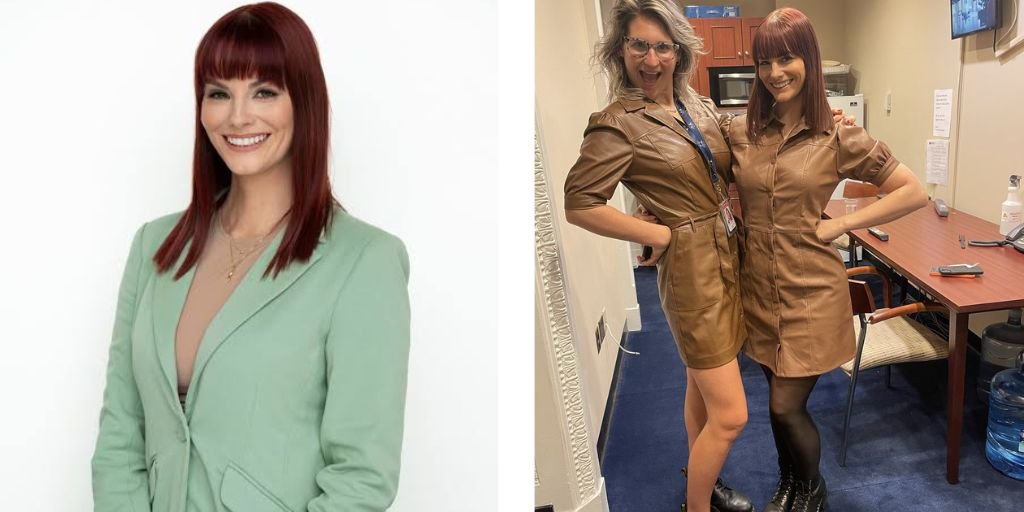
When people think about political journalism, they often picture television studios, breaking-news alerts, and reporters standing outside the U.S. Capitol. But behind every major political story is a journalist who has spent hours checking facts, talking with sources, studying legislation, and trying to understand what is really happening behind the headlines. Melanie Zanona is one of those journalists.
Known for her coverage of Congress and Capitol Hill, Zanona has built a career around explaining American politics to a broad audience. Her professional journey has included positions at CQ Roll Call, The Hill, POLITICO, CNN, Punchbowl News, and NBC News. Her work has placed her close to some of the biggest political stories in Washington.
Today, she is known professionally as a Capitol Hill correspondent for NBC News, where she continues reporting on Congress, lawmakers, legislation, and the political forces shaping Washington.
So, who is Melanie Zanona, how did she reach this level of journalism, and why has her reporting attracted so much attention? Let’s take a closer look.
Who Is Melanie Zanona?
Melanie Zanona is an American political journalist whose specialty is congressional reporting. Rather than focusing primarily on celebrity news or general political commentary, her career has centered on the U.S. Congress and the people who work inside it.
Her professional biography describes her as an award-winning journalist with more than a decade of experience covering Capitol Hill. She has interviewed senior political figures, reported on consequential developments in Washington, and appeared on national television to provide political analysis.
Zanona’s reporting career is interesting because it reflects how political journalism has changed. A congressional reporter is no longer limited to writing newspaper articles. Modern political journalists may report for websites, newsletters, television, social media, and live news broadcasts at the same time.
That requires a combination of traditional reporting skills and the ability to communicate quickly.
Zanona has developed that combination over years of working in Washington. Her experience gives her an understanding of how congressional offices operate, how legislation moves through the Capitol, and how political disagreements develop behind closed doors.
For ordinary readers, this experience matters. Congress can sometimes seem confusing. There are committees, leadership offices, party conferences, negotiations, votes, amendments, and procedural rules. A skilled congressional reporter acts almost like a translator, turning that complicated machinery into a story people can understand.
Early Life and Chicago Background
Public professional profiles identify Chicago, Illinois, as Zanona’s hometown. She has also publicly described herself as someone with strong Chicago roots. Her professional profile on Muck Rack includes the phrase “Chi till I die,” reflecting that connection to the city.
Some online biography websites publish conflicting information about her exact birth year and other personal details. Because those sources do not consistently agree, it is better not to treat every biographical claim circulating online as reliable.
IMDb, for example, lists March 29, 1988, as her birth date, while several biography websites list different years.
This is a useful reminder about internet biographies. A page appearing in search results does not automatically mean every detail has been independently confirmed.
What is much better documented is Zanona’s professional background. Her education and journalism career provide a clearer picture of the path she followed into political reporting.
Her connection to Chicago also appears to remain part of her public identity. Even after years of living and working in Washington, she has continued to reference her hometown and Chicago interests in professional profiles.
That combination of Chicago roots and Washington experience has become part of the public image associated with her career.
Education at the University of Illinois
Zanona studied journalism at the University of Illinois Urbana-Champaign, earning a bachelor’s degree in journalism. Her LinkedIn profile identifies the University of Illinois as her educational institution and lists her college years as 2006 through 2010.
A journalism education can provide the foundation for a career in reporting, but it does not by itself prepare someone for the speed and complexity of Capitol Hill.
Political reporters have to understand much more than how to write a story. They need to know how government works, recognize important developments, identify useful sources, ask effective questions, and distinguish meaningful political changes from ordinary Washington noise.
Zanona’s later career suggests that her education was only the starting point. Her professional experience gradually placed her closer to the center of American political reporting.
For journalism students, her career offers a useful example. You do not necessarily begin at the biggest television network. Instead, you develop your skills through smaller reporting assignments, specialized publications, research, and increasingly demanding responsibilities.
Think of it like climbing a staircase. Each reporting position becomes another step, giving the journalist more knowledge and access before the next opportunity arrives.
The Beginning of Her Journalism Career
Zanona’s early professional experience included work connected to Roll Call and Crain Communications. A journalist profile lists a political reporting fellowship at Roll Call in 2010 and editorial work at Crain Communications afterward.
She later moved into congressional and policy reporting at CQ Roll Call, where she covered policy and legislative action.
This was an important stage in her development because CQ Roll Call specializes in government and congressional affairs. Working in that environment meant dealing with legislation and the policy process on a regular basis.
For someone interested in political reporting, it is an especially valuable training ground.
Imagine trying to learn football by watching only the scoreboard. You would know who won, but you would miss much of what happened on the field.
The same is true of politics. Knowing that Congress passed a bill is one thing. Understanding why it passed, who negotiated it, which lawmakers opposed it, what compromises were made, and what happens next requires much deeper reporting.
Her early work helped develop that type of knowledge.
Her Years at The Hill
Zanona later joined The Hill, where she worked as a staff reporter with a focus on House leadership and congressional affairs. Professional profiles describe her time there as an important part of her rise as a Capitol Hill journalist.
Covering House leadership is demanding because congressional power is constantly shifting.
Party leaders must deal with different factions within their own parties, opposition from the other party, legislative deadlines, public pressure, elections, and disagreements among individual lawmakers.
A reporter following these developments needs more than access to official statements. The most meaningful information can sometimes come from conversations with lawmakers and congressional staff members who understand what is happening behind the scenes.
Zanona’s reporting during this period helped establish her as a journalist capable of following those internal political dynamics.
Her work also gave her experience with some of the personalities and institutions that later became central to national political coverage.
This stage of her career demonstrates an important feature of journalism: specialization can be powerful. Rather than trying to report on everything, Zanona developed expertise in a particular area—Congress.
That expertise became the foundation for later opportunities.
POLITICO and the Huddle Newsletter
In 2019, Zanona joined POLITICO as a congressional reporter. She also became associated with the publication’s Huddle newsletter, a political tipsheet focused on Capitol Hill.
This was a significant step because POLITICO is deeply embedded in the Washington political ecosystem.
The Huddle format also illustrates how political journalism has evolved. Newsletters can provide readers with a different kind of political reporting than traditional articles.
Instead of simply describing what happened, a congressional newsletter can focus on conversations, political strategy, emerging tensions, upcoming battles, and the relationships shaping Capitol Hill.
For a journalist, producing that kind of material requires a broad network of sources and a strong understanding of Washington’s political culture.
Zanona’s work at POLITICO helped increase her visibility among people who closely follow Congress.
It also expanded her role beyond conventional reporting. Her ability to report and explain political developments made her useful to readers who wanted to understand not just the official story but also the political context surrounding it.
CNN and National Television Exposure
In July 2021, Zanona joined CNN as a Capitol Hill reporter, according to multiple professional biographies and media profiles.
Moving from political publications into national television created a new dimension to her career.
Television journalism is different from print and digital reporting. A written article gives readers time to absorb details. Television reporters often have only a short period to explain a complicated development.
They must be accurate, concise, and understandable—sometimes while news is still developing.
Zanona became a familiar face to viewers interested in U.S. politics. Her appearances were connected to major congressional developments, elections, legislation, and political disputes.
Her CNN period also demonstrated how expertise built through years of reporting can translate into television.
Rather than being simply a television personality, she brought the knowledge of a Capitol Hill reporter to the screen.
That distinction is important. Political television can move extremely quickly, but the best reporting still depends on preparation and source development.
Her background gave her the foundation to participate in that fast-moving environment.
Punchbowl News and Continued Congressional Reporting
After her time at CNN, Zanona moved to Punchbowl News, where she served as a senior congressional reporter. Professional profiles describe her as having more than a decade of experience covering Congress by this point.
Punchbowl News has a strong focus on Washington’s political and legislative world, making the role a natural continuation of her congressional reporting career.
At this point, Zanona had already worked across several major political news organizations. That variety gave her experience with different forms of journalism.
She had worked in specialized congressional reporting, political newsletters, digital news, and television.
Each environment demands different skills, but the central responsibility remains the same: find accurate information and explain it clearly.
Her career path also shows that political journalism is not necessarily linear. Journalists may move between newspapers, digital publications, television networks, newsletters, and specialized political outlets.
What remains valuable is their expertise and credibility.
Joining NBC News
Zanona later joined NBC News as a Capitol Hill correspondent. Current professional profiles identify her with NBC News and describe her as a Washington-based journalist covering politics and Congress.
Her NBC role represents another major stage in her career.
NBC News gives her access to a broad national audience, while her Capitol Hill specialization allows her to focus on one of the most important institutions in American government.
Her work has included appearances across NBC programming, and IMDb’s professional credits list her as an NBC News Capitol Hill correspondent on programs including NBC Nightly News, Weekend Today, and Sunday Today with Willie Geist.
That television presence illustrates how far her journalism career has developed.
She began by learning the fundamentals of reporting and gradually built specialized knowledge of Congress. She then moved through increasingly prominent political news organizations before reaching a national broadcast network.
For aspiring journalists, this career path offers an important lesson: expertise compounds.
The more deeply a reporter understands a subject, the more valuable that knowledge can become.
Reporting Style and Why Audiences Notice Her
What makes a congressional correspondent effective?
It is not simply being able to stand outside the Capitol and deliver breaking news. The reporter must understand what the information means.
Zanona’s work has largely focused on political developments that require context. Congress is filled with competing interests, and a single vote can have several different meanings depending on the political situation surrounding it.
Her role involves connecting those dots.
A good political reporter is somewhat like a bridge. On one side are lawmakers, congressional staff, political parties, and government institutions. On the other side are ordinary people trying to understand what those decisions mean.
The journalist connects the two.
That is especially important during periods of political uncertainty. When voters see headlines about legislation, leadership battles, government funding, or elections, they naturally want to know what happens next.
Experienced congressional reporters can provide that context.
Zanona’s long experience covering Capitol Hill gives her a perspective that newer reporters may not yet have developed.
Personal Life, Public Interest, and Privacy
Because Zanona appears frequently on television, people naturally search for information about her personal life, including her family, relationships, age, and interests.
However, online sources contain conflicting claims about several of these subjects. For example, different biography sites publish different birth years, family details, and financial estimates. Those claims should therefore be treated cautiously unless supported by reliable primary or professional sources.
What is better established is that Zanona has publicly mentioned personal interests connected to Chicago, including Chicago sports, and professional profiles have referenced her enjoyment of cooking Italian food and spending time with her dog, Bodie.
It is also worth remembering that being a public journalist does not mean every aspect of someone’s private life is public information.
There is a difference between learning about a reporter’s career and investigating personal details that have never been reliably documented.
For readers, sticking to confirmed professional information is the safest way to understand her story.
Why Melanie Zanona’s Career Matters
Why should the general public care about the career of a congressional reporter?
Because journalism plays an important role in helping citizens understand government.
Most people do not have time to read congressional documents, attend committee hearings, track every vote, or speak with lawmakers. Reporters perform much of that work on behalf of the public.
Congress affects taxes, spending, healthcare, education, immigration, national security, infrastructure, and countless other areas of everyday life.
Political journalism helps connect those decisions to the people affected by them.
Zanona’s career is particularly interesting because it has been built around this exact area of reporting.
From early policy coverage to House leadership reporting, political newsletters, cable television, specialized Washington journalism, and national broadcast news, her professional path has consistently centered on understanding Congress.
Her story also demonstrates that successful journalism is rarely created overnight.
It is built through years of reporting, interviewing, researching, writing, developing sources, making mistakes, learning from them, and gradually becoming more knowledgeable.
That long-term development is perhaps the most interesting part of her career.
Melanie Zanona’s Continuing Role in Political Journalism
As American politics continues to change, the demand for experienced congressional reporters remains strong.
Washington is rarely quiet for long. Elections bring new lawmakers, party control can change, legislation can create unexpected conflicts, and political alliances can shift rapidly.
For a Capitol Hill correspondent, that means there is always another story.
Zanona’s background positions her to continue covering those developments for a national audience.
Her professional experience across multiple news organizations also gives her a broad understanding of how Washington journalism works.
At the same time, political reporting continues to change. Social media has accelerated the news cycle, while audiences increasingly expect journalists to provide immediate explanations.
That creates a difficult balance: speed matters, but accuracy matters even more.
The challenge for experienced reporters is to provide information quickly without sacrificing verification.
That principle is at the heart of good journalism.
Conclusion
Melanie Zanona’s career is a story of specialization, persistence, and professional growth. From journalism school at the University of Illinois to early reporting positions and eventually major roles at The Hill, POLITICO, CNN, Punchbowl News, and NBC News, she has spent much of her career following the people and institutions that shape American politics.
Her journey shows that becoming a respected political journalist takes more than appearing on television. It requires years of reporting, research, source development, political knowledge, and the ability to explain complicated events in simple language.
For audiences trying to understand Washington, that expertise can be extremely valuable. Congress may sometimes look like a maze, but experienced reporters help turn that maze into a story people can follow.
FAQs About Melanie Zanona
1. Who is Melanie Zanona?
Melanie Zanona is an American political journalist and Capitol Hill correspondent. She has built a career covering Congress and Washington politics for organizations including The Hill, POLITICO, CNN, Punchbowl News, and NBC News.
2. Where did Melanie Zanona study journalism?
She attended the University of Illinois Urbana-Champaign and earned a bachelor’s degree in journalism. Her LinkedIn profile lists the university and her attendance from 2006 to 2010.
3. What does Melanie Zanona do at NBC News?
She works as a Capitol Hill correspondent for NBC News, covering Congress and U.S. politics. Her professional credits also show appearances on NBC programs including NBC Nightly News and Weekend Today.
4. Did Melanie Zanona work for CNN?
Yes. She joined CNN in 2021 as a Capitol Hill reporter and covered congressional and political developments before moving to Punchbowl News and subsequently NBC News.
5. Why is Melanie Zanona known in political journalism?
She is known primarily for her extensive coverage of Congress and Capitol Hill. Her experience at several major political news organizations and her television appearances have helped establish her as a recognizable congressional journalist.
